
Peman sebagai Minyak Termal Mesin – Diproduksi oleh PT Indira Mitra Boiler
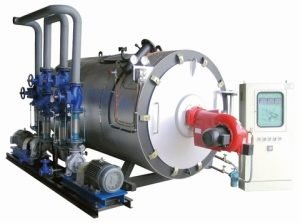
PT Indira Mitra Boiler adalah mesin yang sering digunakan di berbagai industri dan berfungsi sebagai alat penghasil panas serta berfungsi sebagai penghantar media panas dengan menggunakan media minyak dalam pipa berdesain spiral yang ditempatkan di dalam tabung/tangki pemanas yang dirancang sedemikian rupa sehingga kemudian dipanaskan oleh api yang berasal dari burner dengan bahan bakar tertentu. Nilai kalor yang dihasilkan oleh minyak termal ini dapat mencapai lebih dari 300 °C. Untuk bahan bakar Pemanas Minyak Termal ini, terdapat berbagai jenis Pemanas Minyak Termal untuk bahan bakar gas, Pemanas Minyak Termal untuk bahan bakar batubara, Pemanas Minyak Termal untuk bahan baka r diesel, Pemanas Minyak Termal untuk bahan bakar kayu, dll. Mesin penghasil panas biasanya diperoleh dari pemanas yang menggunakan energi listrik.
Namun, karena konsumsi energi panas untuk berbagai perusahaan/pabrik industri atau kebutuhan aspal yang sangat besar, maka minyak termal adalah solusinya. Hal ini berdasarkan pertimbangan biaya konsumsi dengan membandingkan biaya listrik dan bahan bakar untuk pemanas minyak termal. Anda bisa membayangkan berapa banyak energi listrik dan biaya yang harus dikeluarkan pabrik di PLN jika pemanas menggunakan listrik. Sebagian besar perusahaan besar yang menggunakan energi panas menggunakan Boiler Uap.
Pemanas Minyak Termal untuk Industri
Pemanas Minyak Termal merupakan solusi pemanasan industri untuk proses yang membutuhkan suhu tinggi tetapi tidak memerlukan uap. Banyak fasilitas manufaktur yang masih menggunakan boiler uap karena terbiasa dengan teknologi tersebut, meskipun prosesnya hanya membutuhkan panas tidak langsung. Dalam kondisi ini, Pemanas Minyak Termal dapat menjadi alternatif yang lebih efisien, ekonomis, dan praktis. Boiler menghasilkan uap jenuh dengan pemanasan udara bertekanan, umumnya pada suhu 170°C–210°C, serta membutuhkan peralatan pendukung seperti pengolahan udara, tangki umpan, deaerator, sistem pembuangan, dan dosis bahan kimia. Sebaliknya, Pemanasan Minyak Termal menggunakan cairan transfer panas dalam sistem loop tertutup untuk mencapai suhu hingga 350°C pada tekanan rendah. Sistem ini mengurangi masalah pengolahan udara, kerak, korosi, dan kehilangan uap. Jika uap tidak diperlukan, sistem ini menawarkan efisiensi tinggi, biaya operasi rendah, dan perawatan sederhana.
Desain Fleksibel untuk Berbagai Aplikasi Industri
Pemanas Minyak Termal tersedia dalam konfigurasi horizontal dan vertikal untuk mengakomodasi tata letak pabrik dan persyaratan instalasi yang berbeda.
Desain Vertikal
Konfigurasi vertikal ideal untuk fasilitas dengan ruang instalasi terbatas. Jejaknya yang ringkas memungkinkan integrasi yang lebih mudah ke dalam jalur produksi yang ada sambil mempertahankan kinerja termal yang sangat baik. Unit vertikal umumnya digunakan untuk kapasitas pemanasan kecil hingga menengah.
Desain Horizontal
Pemanas Minyak Termal Horizontal umumnya lebih disukai untuk sistem berkapasitas sedang dan besar karena memberikan akses yang lebih mudah untuk inspeksi, perawatan, dan servis pembakar. Permukaan pemanas yang lebih besar juga mendukung keluaran termal yang lebih tinggi dan kemudahan perawatan yang lebih baik selama masa pakai peralatan.
Kumparan Pemanas Berkualitas Tinggi
Inti dari setiap Pemanas Minyak Termal adalah kumparan pemanasnya , yang diproduksi dari tabung boiler tanpa sambungan berkualitas premium yang dirancang khusus untuk penggunaan pada suhu tinggi.
Kumparan tersebut dililit secara kontinyu untuk memberikan ekspansi termal yang seragam dan menghemat panas yang efisien. Selama fabrikasi, setiap sambungan las menjalani pemeriksaan kualitas yang ketat, termasuk Pengujian Tanpa Merusak seperti Pengujian Radiografi (RT) atau metode inspeksi lain yang disetujui jika berlaku, diikuti dengan uji tekanan hidrostatik untuk memverifikasi integritas mekanis dan kinerja bebas kebocoran sebelum pengiriman.
Proses manufaktur yang ketat ini memastikan:
- Kekuatan mekanik tinggi
- Ketahanan yang sangat baik terhadap tekanan termal
- Pengoperasian jangka panjang yang andal
- Kinerja yang aman dalam kondisi penggunaan industri berkelanjutan.
Dioptimalkan untuk Performa Maksimal
Pemanas Minyak Termal bergantung pada sistem sirkulasi yang menjaga aliran oli optimal melalui koil pemanas agar penyerapan dan distribusi panas berlangsung efisien. Aliran yang tidak cukup dapat menyebabkan panas berlebih, degradasi oli, serta pembentukan karbon atau pengkokasan pada koil, sehingga menurunkan efisiensi, meningkatkan konsumsi bahan bakar, dan memperpendek umur peralatan. Untuk keamanan, sistem dilengkapi pengontrol suhu, termokopel atau sensor RTD, saklar aliran, instrumen tekanan, tangki ekspansi, dan interlock pembakar. Sistem memantau kondisi operasi dan mematikan pembakar saat suhu tidak normal atau aliran tidak mencukupi. Hasilnya, pengoperasian 24/7 lebih stabil, efisien, hemat energi, dan meminimalkan perawatan.
Sistem sirkulasi yang dioptimalkan memberikan beberapa manfaat penting:
- Memaksimalkan efisiensi ekonomi musim panas
- Mencegah panas berlebih lokal (titik panas)
- Meminimalkan degradasi dan oksidasi oli termal
- Mengurangi pengendapan karbon (coking) di dalam koil.
- Mempertahankan suhu yang seragam di seluruh sistem.
- Meningkatkan efisiensi bahan bakar
- Memperpanjang masa pakai oli termal.
- Meningkatkan umur pakai kumparan pemanas dan pipa.
- Mengurangi kebutuhan perawatan dan biaya operasional.
TERMAL PEMBANAS MINYAK
Salah satu keunggulan utama Pemanas Minyak Termal adalah sistem transfer panasnya yang sangat efisien. Transfer energi termal melalui dua tahap untuk memaksimalkan pemanfaatan bahan bakar. Tahap pertama berlangsung di bagian radiasi atau tungku, ketika nyala api pembakar dan gas pembakaran bersuhu tinggi memancarkan panas langsung ke kumparan minyak termal yang mengelilingi ruang pembakaran. Proses radiasi ini menghasilkan sebagian besar energi termal sistem. Tahap kedua terjadi di bagian konveksi, ketika gas pembakaran panas yang tersisa melewati beberapa deretan koil sebelum keluar melalui cerobong. Sisa panas dari pembuangan gas kemudian ditransfer ke oli termal yang bersirkulasi, sehingga meningkatkan efisiensi termal secara keseluruhan. Desain kumparan multi-pass memaksimalkan pemulihan panas, mengurangi kehilangan panas melalui cerobong, dan menjaga suhu oli tetap seragam di seluruh sistem. Hasilnya, Pemanas Minyak Termal mampu menghasilkan efisiensi tinggi, konsumsi bahan bakar lebih rendah, suhu proses stabil, serta pengoperasian jangka panjang yang andal untuk berbagai kebutuhan pemanasan industri.
Studi Perbandingan: Mengapa Memilih Pemanas Minyak Termal?
Pemanas minyak termal telah menjadi solusi pemanasan pilihan untuk banyak proses industri yang membutuhkan suhu tinggi dengan tekanan operasi rendah. Tidak seperti boiler uap konvensional , yang bergantung pada udara bertekanan untuk menghasilkan uap, sistem minyak termal mengalirkan cairan transfer panas yang tertutup diformulasikan khusus melalui sirkuit. Desain ini menawarkan efisiensi yang lebih tinggi, peningkatan keamanan, perawatan yang lebih rendah, dan kontrol suhu yang lebih stabil.
Berikut adalah perbandingan antara Pemanas Minyak Termal ir dan Katel Uap
1. Suhu Tinggi pada Tekanan Operasi Rendah
Salah satu keunggulan paling signifikan dari Pemanas Minyak Termal transfer panas suhu tinggi—biasanya hingga 300–350°C—sambil beroperasi pada tekanan rendah , umumnya hanya pada tekanan yang diperlukan untuk mensirkulasikan minyak termal melalui sistem. Tidak seperti boiler uap, yang membutuhkan tekanan operasi yang semakin tinggi untuk menghasilkan suhu yang lebih tinggi, sistem minyak termal mencapai suhu proses yang sama tanpa menghasilkan uap bertekanan tinggi.
Pengoperasian pada tekanan rendah menawarkan keuntungan besar dalam hal keselamatan, desain peralatan, dan pemeliharaan. Karena sistem ini tidak diklasifikasikan sebagai bejana uap bertekanan tinggi, risiko yang terkait dengan kegagalan akibat tekanan berkurang secara signifikan, sehingga menghasilkan pengoperasian industri yang lebih aman dan andal.
Dibandingkan dengan boiler uap konvensional, Pemanas Minyak Termal menawarkan:
- Suhu proses tinggi hingga >350°C pada tekanan operasi rendah.
- Peningkatan keselamatan operasional
- Mengurangi tekanan mekanis pada pipa dan peralatan.
- Mengurangi risiko kecelakaan terkait tekanan.
- Sistem perpipaan dan distribusi yang lebih sederhana
- Biaya pemasangan dan perawatan yang lebih rendah
- Kontrol suhu yang lebih stabil dan presisi.
- Keandalan sistem yang lebih tinggi selama pengoperasian terus menerus.
- Keunggulan-keunggulan ini menjadikan Pemanas Minyak Termal sebag ai pilihan utama untuk aplikasi industri yang membutuhkan proses pemanasan suhu tinggi dengan keamanan dan efisiensi maksimal.
2. Sistem Fluida Perpindahan Panas Sirkuit Tertutup
Pemanas Minyak Termal menggunakan sistem perpindahan panas loop tertutup di mana minyak termal yang diformulasikan kh usus terus bersirkulasi antara pemanas dan proses peralatan. Cairan panas berpindah menyerap energi termal dari pembakar dan mengirimkannya langsung ke proses sebelum kembali ke pemanas untuk dipanaskan kembali. Tidak seperti udara dalam boiler uap, minyak termal tetap dalam fase cair selama pengoperasian normal. Minyak ini tidak menguap, tidak habis selama proses pemanasan, dan terus bersirkulasi di dalam sistem perpipaan tertutup.
Oli termal umumnya hanya perlu diganti dalam kondisi berikut:
- Kerugian kecil yang disebabkan oleh kebocoran sistem
- Penggantian terjadwal pada akhir masa pakai cairan.
- Perawatan atau modifikasi sistem yang memerlukan pengeluaran cairan.
Karena fluida transfer panas yang sama digunakan kembali secara terus menerus, sistem ini menghilangkan banyak tantangan operasional yang terkait dengan pembangkitan uap, termasuk pengolahan umpan udara, kehilangan akibat pembuangan uap, dan konsumsi udara terus menerus.
Desain loop tertutup memberikan banyak keuntungan operasional, termasuk:
- Tidak ada konsumsi air terus menerus.
- Tidak ada kehilangan uap selama pengoperasian.
- Tidak terjadi penguapan dalam kondisi operasi normal.
- Perpindahan panas yang stabil dan seragam
- Menghemat biaya operasional
- Persyaratan perawatan yang lebih rendah
- Peningkatan efisiensi termal
- Masa pakai fluida transfer panas yang lebih lama.
- Pengoperasian dan sistem pengelolaan yang tertanam.
Sistem sirkulasi tertutup yang efisien ini adalah salah satu alasan utama mengapa Pemanas Minyak Termal banyak digunakan di industri yang membutuhkan proses pemanasan suhu tinggi secara terus menerus dengan biaya operasional rendah dan gangguan yang luar biasa.
3. Tidak Terbentuknya Kerak dan Perpindahan Panas yang Unggul
Salah satu keunggulan utama Pemanas Minyak Termal adalah kemampuannya menghilangkan masalah kerak yang umum ditemukan pada sistem boiler uap konvensional. Boiler uap menggunakan udara sebagai media transfer panas, dan udara alami mengandung mineral terlarut seperti kalsium, magnesium, dan silika. Tanpa pengolahan udara yang tepat, mineral-mineral ini akan mengendap dan membentuk kerak pada permukaan bagian dalam tabung boiler. Bahkan lapisan kerak yang tipis pun bertindak sebagai penghalang isolasi, secara signifikan mengurangi efisiensi perpindahan panas, meningkatkan konsumsi bahan bakar, dan menciptakan titik panas lokal yang dapat memperpendek masa pakai tabung boiler. Sebaliknya, minyak termal adalah cairan transfer panas yang diformulasikan secara khusus yang tidak mengandung mineral terlarut dan bersirkulasi dalam sistem tertutup sepenuhnya. Akibatnya, sistem ini tidak mengalami pembentukan kerak atau pemadatan mineral seperti yang terjadi pada sistem pemanas berbasis udara.
Keunggulan utama meliputi:
- Tidak ada pembentukan kerak di dalam kumparan pemanas.
- Tidak ada pengendapan kapur atau kalsium.
- Tidak ada pengot oran internal yang disebabkan oleh kesadahan udara.
- Efisiensi menghilangkan panas yang konsisten
- Konsumsi bahan bakar lebih rendah
- Risiko panas berlebih berkurang berkat isolasi kerak.
- Masa pakai kumparan pemanas yang lebih lama
Karena panas yang berubah tetap bersih selama pengoperasian, Pemanas Minyak Termal mempertahankan kinerja termal yang stabil dan efisiensi tinggi selama bertahun-tahun penggunaan industri yang berkelanjutan.
4. Biaya Perawatan Lebih Rendah
Karena pemanas minyak termal beroperasi tanpa udara atau uap, pemanas ini menghilangkan banyak tugas perawatan yang dibutuhkan oleh sistem boiler uap konvensional. Boiler berbasis udara memerlukan pemantauan dan perawatan terus menerus untuk mencegah kerak, korosi, serangan oksigen, dan pengendapan mineral yang dapat mengurangi efisiensi dan merusak komponen penting.
Instalasi boiler uap pada umumnya sering membutuhkan beberapa sistem pendukung, termasuk:
- Pelunak air
- Tangki deaerator
- Tangki air umpan
- Sistem pemberian dosis bahan kimia
- Sistem pembuangan
- Pemantauan kualitas udara secara terus menerus.
- Pembersihan kerak dan selang secara berkala
Sistem-sistem ini meningkatkan baik investasi awal maupun biaya operasional berkelanjutan.
Sebagai perbandingan, Pemanas Minyak Termal menggunakan sistem sirkulasi tertutup di mana fluida transfer panas terus digunakan kembali. Karena tidak ada penguapan, pembuangan, atau kontaminasi mineral, perawatan rutin berkurang secara signifikan.
Aktivitas perawatan umum untuk Pemanasan Minyak Termal meliputi:
- Inspeksi berkala pada pompa sirkulasi
- Perawatan burner dan penyetelan pembakaran
- Memeriksa kualitas oli termal
- Memeriksa tangki ekspansi dan perpipaan
- Memverifikasi pengoperasian kontrol keselamatan dan instrumentasi.
Tidak adanya peralatan pengolahan udara dan perawatan terkait kerak menghasilkan beberapa manfaat penting:
- Biaya perawatan lebih rendah
- Mengurangi waktu henti pabrik
- Sistem yang membantu lebih sedikit
- Biaya operasional lebih rendah
- Peningkatan keseluruhan peralatan
- Masa pakai lebih lama
- Ketersediaan tanaman secara keseluruhan yang lebih tinggi
Keunggulan-keunggulan ini menjadikan Pemanas Minyak Termal sebagai pilihan yang ekonomis dan andal bagi industri yang membutuhkan proses pemanasan suhu tinggi dengan persyaratan perawatan minimal.
5. Perpindahan Panas yang Efisien
Salah satu keunggulan utama Pemanas Minyak Termal adalah sistem transfer panas yang sangat efisien. Transfer energi termal melalui dua tahap untuk memaksimalkan pemanfaatan bahan bakar. Tahap pertama terjadi di bagian radiasi atau tungku, ketika nyala api pembakar dan gas pembakaran bersuhu tinggi memancarkan panas langsung ke kumparan minyak termal di sekitar ruang pembakaran. Tahap kedua berlangsung di bagian konveksi, saat gas panas melewati beberapa deretan koil sebelum keluar melalui cerobong. Sisa panas transfer ke oli termal yang bersirkulasi. Desain kumparan multi-pass memaksimalkan pemulihan panas, mengurangi kehilangan panas, dan menjaga suhu oli seragam, sehingga menghasilkan efisiensi tinggi, konsumsi bahan bakar rendah, suhu stabil, serta operasi yang andal.
6. Sirkulasi Minyak Termal Berkesinambungan
Pompa sirkulasi adalah salah satu komponen paling penting dari Pemanas Minyak Termal. Fungsi utamanya adalah untuk menjaga aliran minyak termal yang kontinu melalui kumparan pemanas dan seluruh sistem loop tertutup, memastikan perpindahan panas yang efisien dan pengoperasian yang aman. Karena oli termal terus bersirkulasi, panas diserap secara merata di bagian radiasi dan konveksi sebelum dialirkan ke peralatan proses. Aliran oli yang konstan mencegah suhu berlebihan berkembang di titik mana pun di dalam kumparan pemanas, melindungi sistem dari tekanan termal dan memperpanjang umur peralatan.
Sirkulasi berkelanjutan memberikan beberapa manfaat penting:
- Terjadinya panas berlebih lokal (titik panas) di dalam kumparan pemanas.
- Melindungi tabung pemanas dari kerusakan termal dan kegagalan dini.
- Mempertahankan suhu oli yang seragam di seluruh sistem pemanas.
- Meningkatkan efisiensi pembangunan musim panas
- Memperpanjang masa pakai oli termal dan komponen pemanas.
- Mengubah kontrol suhu proses yang stabil dan Andal.
Oleh karena itu, Pemanas Minyak Termal dilengkapi dengan saklar aliran dan sistem pengaman interlock. . Jika pompa sirkulasi berhenti atau aliran minyak turun di bawah tingkat aman minimum sementara pembakar masih beroperasi, sistem kontrol secara otomatis mematikan pembakar untuk mencegah panas berlebih.
Tanpa sirkulasi oli yang memadai, suhu kumparan pemanas dapat meningkat dengan cepat melebihi batas desain yang, menyebabkan degradasi oli termal (keretakan), pengendapan karbon (pengendapan karbon), menyebabkan kumparan, dan berpotensi kerusakan permanen pada tabung pemanas. Oleh karena itu, sistem sirkulasi yang dirancang dengan benar sangat penting untuk mencapai efisiensi maksimum, keselamatan operasional, dan tujuan jangka panjang.
7. Sistem Kontrol Keselamatan Tingkat Lanjut
Meskipun pemanas minyak termal beroperasi pada tekanan rendah, ia tetap memerlukan sistem kontrol dan perlindungan yang canggih untuk memastikan pengoperasian yang aman, andal, dan efisien. Risiko operasional terbesar adalah panas berlebih , yang dapat menurunkan kualitas minyak termal, merusak kumparan pemanas, dan memperpendek masa pakai seluruh sistem.
Untuk mencegah kondisi tersebut, Pemanas Minyak Termal modern dilengkapi dengan berbagai perangkat keselamatan yang terus memadukan parameter pengoperasian dan secara otomatis mematikan pembakar jika terjadi kondisi tidak normal.
Komponen keselamatan yang umum meliputi:
- batas suhu tinggi
- suhu pengoperasian
- Sakelar aliran
- Tingkat penukar oli termal rendah
- Pengukur tekanan
- Tangki ekspansi
- Sistem pengaman nyala api pembakar
- Sakelar tekanan bahan bakar rendah
- Suhu gempa udara tinggi
- Sistem Darurat (ESD)
Perangkat-perangkat ini terintegrasi melalui panel kontrol untuk memberikan beberapa lapisan perlindungan. Pengontrol suhu terus mempertahankan suhu oli termal melalui termokopel atau sensor RTD, sementara saklar memverifikasi bahwa sirkulasi oli yang memadai terjaga sebelum mengizinkan pengoperasian pembakar. Jika suhu oli yang berlebihan, hilangnya sirkulasi, kegagalan api, atau kondisi tidak aman lainnya terdeteksi, pembakar akan mati secara otomatis untuk mencegah panas berlebih dan melindungi peralatan serta personel pengoperasian. Filosofi keselamatan komprehensif ini memastikan batasan sistem maksimum sekaligus meminimalkan kegagalan risiko peralatan dan waktu henti yang tidak direncanakan.
8. Peningkatan Kemudahan bagi Operator Melalui Otomatisasi
Pemanas minyak termal modern dilengkapi dengan PLC (Programmable Logic Controller) atau sistem kontrol berbasis mikroprosesor canggih yang secara otomatis mengatur pengoperasian pembakar sesuai dengan kebutuhan proses panas. Alih-alih terus-menerus menghidupkan dan mematikan pembakar, sistem kontrol dapat mengoperasikan pembakar satu tahap, dua tahap, atau pembakar modul penuh untuk mempertahankan suhu oli yang tepat sekaligus memaksimalkan efisiensi bahan bakar.
Keunggulan operasional utama meliputi:
- Intervensi operator minimal.
- Kontrol suhu otomatis sepenuhnya
- Proses pemanasan yang stabil dan konsisten
- Konsumsi bahan bakar berkurang
- Peningkatan kualitas produksi
- Respons yang lebih cepat terhadap perubahan beban proses.
- Pemantauan parameter operasi secara terus menerus
- Diagnostik alarm dan kerusakan untuk memudahkan perawatan.
- Mengurangi risiko kesalahan manusia
Banyak sistem modern juga dilengkapi dengan antarmuka manusia-mesin (HMI) layar sentuh, kemampuan pemantauan jarak jauh, dan fungsi pencatatan data yang memungkinkan operator untuk menyatukan kinerja sistem secara real-time. Tingkat otomatisasi yang tinggi ini meningkatkan produktivitas, mengurangi biaya operasional, dan memastikan kualitas proses yang konsisten di seluruh operasi industri yang berkelanjutan.
9. Tabung Boiler Suhu Tinggi untuk Masa Pakai yang Panjang
Meskipun pemanas minyak termal beroperasi pada tekanan yang relatif rendah, kumparan pemanas terus menerus terpapar suhu yang dapat mencapai 350°C atau lebih tinggi . Karena alasan ini, hanya pipa boiler tanpa sambungan berkualitas tinggi yang dirancang khusus untuk penggunaan pada suhu tinggi yang boleh digunakan.
Bahan-bahan umum meliputi:
- ASTM A106 Kelas B
- ASTM A192
- EN 10216 P235GH
- DIN 17175 ST35.8
Bahan-bahan ini memberikan kekuatan mekanik yang sangat baik, konduktivitas termal yang unggul, dan ketahanan luar biasa terhadap kelelahan termal yang disebabkan oleh siklus pemanasan dan pendinginan berulang.
Penggunaan pipa boiler premium menawarkan beberapa keunggulan penting:
- Ketahanan tinggi terhadap tekanan termal
- Dimensi stabilitas yang sangat baik pada suhu tinggi
- Mengurangi risiko pengembalian tabung
- Masa pakai lebih lama
- Peningkatan keselamatan operasional
- Persyaratan perawatan yang lebih rendah
- Kinerja yang Andal selama pengoperasian industri yang berkelanjutan.
Jika dikombinasikan dengan sirkulasi oli termal yang tepat, pengendalian pembakaran yang efektif, dan perawatan preventif rutin, tabung boiler suhu tinggi ini memungkinkan Pemanas Oli Termal beroperasi secara efisien dan andal selama bertahun-tahun, bahkan dalam kondisi industri yang menuntut.
10. Beragam Aplikasi Industri
Pemanas Minyak Termal secara luas diakui sebagai salah satu sistem pemanas industri yang paling serbaguna, melayani berbagai industri yang membutuhkan proses pemanasan suhu tinggi, seragam, dan andal . Kemampuannya untuk menghasilkan suhu hingga 350°C sambil beroperasi pada tekanan rendah menjadi solusi ideal untuk proses manufaktur berkelanjutan di mana kontrol suhu yang tepat, efisiensi energi, dan keselamatan operasional sangat penting. Berbeda dengan boiler uap konvensional, Pemanas Minyak Termal mentransfer panas secara tidak langsung melalui sistem sirkulasi tertutup, sehingga memberikan energi termal yang konsisten tanpa memerlukan uap bertekanan tinggi. Hal ini membuat pemanas minyak termal sangat cocok untuk aplikasi yang melibatkan pemanasan, pengeringan, peleburan, pengawetan, distilasi, penguapan, polimerisasi, dan proses suhu industri sensitif lainnya .
Aplikasi Industri Khas Industri Minyak Sawit
Pemanas Minyak Termal banyak digunakan di pabrik dan kilang minyak sawit untuk memanaskan Minyak Sawit Mentah (CPO) , Minyak Inti Sawit (PKO) , tangki penyimpanan, penukar panas, sistem penghilang bau, pabrik fraksinasi, dan proses penyulingan. Pemanasan ini juga menyediakan energi termal ke pengering inti sawit, sistem pendukung sterilisasi, dan fasilitas produksi minyak nabati.
Industri Aspal dan Bitumen
Digunakan untuk memanaskan tangki penyimpanan aspal, pipa bitumen, pabrik pencampur aspal (AMP), produksi emulsi, dan peralatan konstruksi jalan, untuk memastikan viskositas yang tepat yang dibutuhkan untuk pemompaan dan pencampuran.
Industri Kimia dan Petrokimia
Menyediakan proses pemanasan yang stabil untuk reaktor, kolom distilasi, bejana pencampur, penukar panas, evaporator, unit polimerisasi, dan pembuatan bahan kimia khusus di mana kontrol suhu yang akurat sangat penting.
Industri Makanan dan Minuman
Mendukung kegiatan memasak, penggorengan, pembakaran, pembakaran, pemurnian minyak nabati, pengolahan susu, produksi gula, pembuatan pati, pengolahan kakao, dan berbagai operasi manufaktur makanan yang membutuhkan panas tidak langsung.
Industri Tekstil
Menyediakan energi termal untuk mesin pengering tekstil, silinder cetak, peralatan pengaturan panas, mesin stenter, proses pewarnaan, penyelesaian kain, dan aplikasi pelapisan.
Industri Karet
Digunakan dalam pencampuran karet, vulkanisasi, transmisi lateks, pembuatan ban, produksi sabuk konveyor, dan pembuatan komponen karet cetakan.
Industri Farmasi
Menyediakan pemanasan yang bersih dan akurat untuk reaktor farmasi, sistem pengeringan, peralatan pendukung sterilisasi, sintesis kimia, dan proses manufaktur presisi yang membutuhkan suhu stabil.
Industri Resin, Perekat, Cat, dan Pelapis
Pemanas Minyak Termal banyak digunakan dalam produksi resin sintetis, perekat, tinta, cat, pernis, pelapis, dan bahan kimia khusus di mana suhu proses yang konsisten secara langsung mempengaruhi kualitas produk.
Industri Pengolahan Kayu
Digunakan untuk pengering veneer, produksi kayu lapis, pembuatan papan partikel, produksi MDF, sistem pengeringan kiln, pengawetan kayu, dan fasilitas pengolahan kayu.
Industri Plastik dan Polimer
Mendukung proses ekstrusi, pencetakan injeksi, pencetakan tiup, termoforming, daur ulang plastik, pembuatan komposit, dan pemrosesan polimer pada suhu mana cetakan dan proses yang tepat diperlukan.
Industri Percetakan dan Pengemasan
Menyediakan proses pemanasan untuk mesin laminasi, pengering oven, mesin cetak fleksografi, percetakan gravure, jalur pelapisan, produksi film, dan peralatan pengemasan.
Biomassa dan Industri Pertanian
Ideal untuk pengering putar, pengering biji-bijian, pengering biomassa, produksi pakan ternak, pembuatan pupuk, penggilingan padi, pengeringan jagung, produksi pelet kayu, dan fasilitas pengolahan pertanian lainnya.
Industri Minyak & Gas
Digunakan secara luas untuk memanaskan minyak mentah, minyak bakar, minyak pelumas, tangki penyimpanan, pipa, pemisah, sistem pemanas kargo laut, dan aplikasi pengendalian viskositas untuk produk minyak bumi.
Fasilitas Terminal Laut dan Tangki
Menyediakan pemanasan yang efisien untuk bahan bakar minyak berat (HFO), bitumen, lilin, aspal, molase, minyak nabati, bahan kimia, dan cairan kental lainnya yang disimpan dalam tangki atau diangkut oleh kapal tanker dan tongkang.
Industri Energi Terbarukan dan Biofuel
Mendukung produksi biodiesel, pengolahan bioetanol, daur ulang minyak bekas, pembangkit energi biomassa, dan penerapan pemanasan industri berkelanjutan yang membutuhkan transfer panas tidak langsung yang efisien.
Mengapa Industri Lebih Memilih Pemanas Minyak Termal?
Di berbagai industri ini, Pemanas Minyak Termal menawarkan beberapa keunggulan operasional:
- Suhu proses tinggi hingga 350°C
- Pengoperasian bertekanan rendah dan lebih aman.
- Stabilitas suhu yang sangat baik
- Efisiensi termal tinggi
- Distribusi panas yang merata
- Konsumsi bahan bakar berkurang
- Persyaratan perawatan yang lebih rendah
- Masa pakai peralatan yang lebih lama
- Biaya operasional minimal
- Pengoperasian berkelanjutan yang andal
- Integrasi mudah dengan sistem kontrol PLC otomatis.
Seiring industri terus mengutamakan efisiensi energi, keselamatan operasional, dan praktik manufaktur berkelanjutan, Pemanas Minyak Termal telah menjadi solusi pemanasan industri pilihan untuk menerapkan proses suhu tinggi di seluruh dunia , memberikan energi termal yang andal, hemat biaya, dan ramah lingkungan di hampir setiap sektor manufaktur.
Kesimpulan
Untuk industri yang membutuhkan suhu proses stabil di atas 200°C , Pemanas Minyak Termal menawarkan keunggulan signifikan dibandingkan boiler uap konvensional.
Kemampuannya untuk menghasilkan panas suhu tinggi pada tekanan operasi rendah, dikombinasikan dengan sistem transfer panas loop tertutup, menghilangkan banyak tantangan perawatan dan keselamatan yang terkait dengan pembangkitan uap. Tanpa pengolahan udara, pembentukan kerak, atau operasi tekanan tinggi, Pemanas Minyak Termal memberikan efisiensi energi yang lebih besar, biaya operasi yang lebih rendah, dan menghasilkan proses yang lebih baik.
Bagi para produsen yang mencari solusi pemanasan industri yang aman, efisien, dan tahan lama, Pemanas Minyak Termal seringkali merupakan pilihan yang paling praktis dan ekonomis.
Workshop
Kawasan Pergudangan Laksana Business Park, Jalan Laksana 6 Blok F 09, Desa laksana Kec. Pakuhaji, Kab. Tanggerang, Banten – 15570
PT Indira Mitra Boiler
Ratman Bejo
☎️081388666204
Situs web saya
https://indira.co.id
Email: info@indira.co.id
Email: idmratman@gmail.com
https://www.youtube.com/@Ratman_Bejo/videos