Extend The life of the thermal oil heater
Factors Affecting Thermal Oil Life: Understanding Oxidation
One of the most important factors influencing the service life of a Thermal Oil Heater is preventing the oxidation of the heat transfer fluid (thermal oil).
Oxidation is a chemical reaction that occurs when thermal oil is exposed to oxygen, excessive heat, moisture, or catalytic metals over an extended period. As oxidation progresses, the physical and chemical properties of the thermal oil gradually deteriorate, reducing its ability to transfer heat efficiently and protect system components.
Effects of Thermal Oil Oxidation
As thermal oil oxidizes, several undesirable changes occur, including:
- Increased viscosity (oil becomes thicker).
- Higher acid number (increased acidity).
- Darkening of the oil color.
- Formation of sludge and varnish.
- Carbon deposits (coking) on heating coil surfaces.
- Reduced heat transfer efficiency.
- Increased pressure drop through the heating coils.
- Higher fuel consumption due to poor heat transfer.
- Increased maintenance requirements.
- Shortened service life of both the thermal oil and the Thermal Oil Heater.
In severe cases, carbon deposits can adhere to the inner surface of the heating coils, acting as an insulating layer that restricts heat transfer. This causes the coil wall temperature to rise, further accelerating thermal oil degradation and potentially leading to premature heater failure.
Role of Antioxidant Additives
Modern thermal oils are formulated with high-performance antioxidant additives that help slow the oxidation process by inhibiting free-radical reactions. These additives significantly extend the operating life of the thermal oil under normal conditions.
However, antioxidant additives cannot completely prevent oxidation if the system is poorly designed or improperly operated.
Primary Causes of Thermal Oil Oxidation
Several external factors have a much greater influence on oxidation than the oil formulation itself, including:
- Excessive film temperature (localized overheating).
- Entrapped air and oxygen within the thermal oil system.
- Water contamination.
- Catalytic metals such as copper and copper alloys.
- Poor thermal oil circulation or stagnant flow.
- Inadequate expansion tank and venting system design.
- Lack of routine thermal oil analysis and preventive maintenance.
PT Indira Mitra Boiler Engineering Approach
At PT Indira Mitra Boiler, every Thermal Oil Heater is engineered to minimize oxidation through optimized heating coil design, controlled oil velocity, efficient burner combustion, proper expansion tank configuration, and effective air venting. Combined with the use of high-quality thermal oil and regular oil condition monitoring, these design principles significantly extend thermal oil life, improve heat transfer efficiency, reduce maintenance costs, and ensure reliable long-term operation.
Triggers for oxidation in the thermal boiler are:
1. Preventing Overheating in the Heating Coil Chamber
One of the primary factors that accelerates thermal oil oxidation is excessive temperature (overheating) inside the heating coil chamber. Thermal oil begins to degrade rapidly when its film temperature exceeds the maximum design limit specified by the thermal fluid manufacturer or the thermal oil heater.
In industrial applications, the bulk thermal oil temperature is typically maintained within the recommended operating range. As a general guideline, every 10°C increase above the recommended operating temperature can reduce the service life of thermal oil by approximately 50% due to accelerated oxidation and thermal cracking.
For this reason, thermal oil should never remain stagnant inside the heating chamber while the burner is operating. A continuous circulation system is essential to remove heat from the heating coils and distribute it evenly throughout the process.
Optimized Heating Coil Design
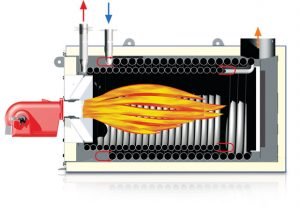
The performance and service life of a Thermal Oil Heater are largely determined by the design of its heating coil. PT Indira Mitra Boiler engineers every Thermal Oil Heater with an optimized multi-pass spiral heating coil configuration to ensure maximum heat transfer efficiency while protecting the thermal oil from premature degradation.
The heating coil geometry is carefully designed to maintain the optimum thermal oil circulation velocity, preventing stagnant flow, minimizing hot spots, and ensuring uniform temperature distribution throughout the system.
Key Design Features
- Optimized Thermal Oil Velocity
The circulation system maintains the recommended oil velocity through the heating coils, ensuring turbulent flow for maximum heat transfer while preventing localized overheating. - Controlled Residence Time
Thermal oil remains inside the heating coil for approximately 3 seconds, allowing efficient heat absorption without exposing the fluid to excessive film temperatures. - Optimized Heating Path
Each heating circuit provides an effective flow path of approximately 6 meters, balancing heat transfer performance with pressure drop and circulation efficiency. - Uniform Heat Distribution
The spiral coil arrangement ensures that heat is distributed evenly across the entire coil surface, eliminating temperature imbalances and reducing thermal stress. - Low Film Temperature Design
By controlling the relationship between heat flux and oil velocity, the design maintains a low tube wall and film temperature, significantly reducing thermal cracking and oxidation of the heat transfer fluid. - Reduced Carbon Formation (Coking)
Proper circulation minimizes carbon deposits on the internal coil surface, preserving heat transfer efficiency and extending maintenance intervals. - Lower Pressure Drop
The optimized coil layout reduces hydraulic resistance, allowing the circulation pump to operate more efficiently while reducing energy consumption. - Extended Equipment Life
Lower thermal stress on the heating coils minimizes metal fatigue, extends the service life of the heater, and improves long-term operational reliability.
Engineering Benefits
The optimized heating coil design provides several important advantages:
- Higher thermal efficiency.
- Faster and more uniform heat transfer.
- Stable outlet oil temperature.
- Reduced thermal oil oxidation.
- Lower risk of localized overheating.
- Longer thermal oil service life.
- Reduced maintenance and cleaning requirements.
- Lower operating costs.
- Improved reliability for continuous industrial operation.
PT Indira Mitra Boiler Engineering Standard
Every Thermal Oil Heater manufactured by PT Indira Mitra Boiler is designed according to proven thermal engineering principles that prioritize safe operation, maximum heat transfer efficiency, and long equipment life. By combining optimized heating coil geometry, controlled oil velocity, and precise burner control, our systems deliver reliable performance for demanding industrial applications while minimizing thermal oil degradation and maintenance costs.
By maintaining the correct oil velocity and residence time, localized hot spots are minimized, significantly reducing thermal oil degradation and extending the operating life of both the thermal oil and the heater.
PT Indira Mitra Boiler Design Standard
This optimized heating coil configuration has become the standard design philosophy of PT Indira Mitra Boiler. Every Thermal Oil Heater is engineered to ensure safe operation, maximum heat transfer efficiency, low maintenance requirements, and long-term reliability for continuous industrial applications.
2. Trapped Air in the Thermal Oil System
Entrapped air is one of the leading causes of thermal oil oxidation and reduced heat transfer efficiency. When air mixes with thermal oil at elevated temperatures, oxygen accelerates the oxidation process, causing the oil to deteriorate more rapidly.
Air can enter the thermal oil system through several sources, including:
- Expansion tank breather vents.
- Improper filling procedures.
- Leaking pipe joints or pump seals.
- Maintenance activities where the system is opened.
- Low oil levels in the expansion tank.
When the heated thermal oil returns to the expansion tank at high velocity, turbulence may occur. If the return piping is not properly designed, the oil can become aerated, creating foam and entrapped air bubbles. These air bubbles circulate throughout the system and can lead to several operational problems, including:
- Accelerated thermal oil oxidation.
- Reduced heat transfer efficiency.
- Pump cavitation and unstable pump operation.
- Increased wear on mechanical seals and bearings.
- Higher operating temperatures.
- Shortened thermal oil service life.
Selecting a high-quality thermal oil with excellent anti-foaming and air-release characteristics can significantly reduce air entrapment and improve overall system reliability.
Best Practice During Initial Commissioning
When filling a new Thermal Oil Heater system or after maintenance, it is essential to completely remove all trapped air before starting normal operation.
PT Indira Mitra Boiler recommends the following procedures:
- Fill the system slowly to minimize air pockets.
- Open all vent valves at the highest points of the piping system.
- Vent the circulation pump before operation.
- Continue venting until thermal oil flows without air bubbles.
- Operate the circulation pump before firing the burner to ensure continuous oil flow.
- Verify that no air remains trapped in the heating coils or process piping.
Proper venting during commissioning is one of the most important steps in extending the service life of thermal oil. Removing trapped air reduces oxidation, prevents pump cavitation, improves heat transfer efficiency, and helps ensure safe, reliable, and long-lasting operation of the entire thermal oil heating system.
3. Water Contamination in the Thermal Oil System
Water contamination is another major factor that accelerates thermal oil degradation and can cause serious damage to the entire heating system. Even a small amount of water entering the thermal oil circuit can significantly reduce system reliability and shorten the service life of both the thermal oil and mechanical components.
Sources of Water Contamination
Water may enter the thermal oil system through several sources, including:
- Condensation inside the expansion tank.
- Leakage from heat exchangers.
- Damaged mechanical seals or pump packing.
- Leaking flange gaskets or threaded pipe connections.
- Improper storage or handling of new thermal oil.
- Moisture entering during maintenance or system shutdown.
Effects of Water Contamination
Water contamination can cause numerous operational problems, including:
- Accelerated oxidation of thermal oil.
- Reduced lubrication properties of the thermal oil.
- Increased wear on circulation pumps, bearings, and mechanical seals.
- Corrosion of internal piping and equipment.
- Reduced heat transfer efficiency.
- Foaming and unstable oil circulation.
- Steam formation at high temperatures, which may result in pressure fluctuations and pump cavitation.
- Increased maintenance costs and unexpected system shutdowns.
In addition, water reduces the effectiveness of the filtration system because contaminants become suspended more easily, making it difficult to maintain oil cleanliness—especially in systems requiring fine filtration.
PT Indira Mitra Boiler Best Practices
To minimize water contamination, PT Indira Mitra Boiler recommends:
- Regularly inspect all pipe joints, flanges, valves, and pump seals for leaks.
- Keep the expansion tank properly sealed while maintaining adequate venting.
- Periodically analyze the thermal oil for moisture content.
- Drain accumulated water from low points in the system when necessary.
- Store new thermal oil in clean, dry containers.
- Select high-quality thermal oil with excellent water separation (demulsibility) characteristics and superior oxidation resistance.
Routine inspection and preventive maintenance are essential to ensure long thermal oil life and reliable system operation.
4. Metal Catalysts and Their Effect on Thermal Oil Oxidation
Certain metals can catalyze the oxidation process of thermal oil, causing the oil to deteriorate much faster than under normal operating conditions.
Among these metals, copper and copper alloys are the most common oxidation catalysts found in industrial equipment.
How Metal Catalysts Accelerate Oxidation
When thermal oil comes into prolonged contact with reactive metal surfaces at elevated temperatures, the oxidation reaction is accelerated. This leads to:
- Faster formation of organic acids.
- Increased sludge and varnish deposits.
- Higher viscosity of the thermal oil.
- Carbon formation (coking) on heating coil surfaces.
- Reduced heat transfer efficiency.
- Shorter thermal oil service life.
Unlike thermal degradation caused by excessive temperature, catalytic oxidation may occur even when the system operates within its normal temperature range.
Equipment Containing Copper
Copper or copper-alloy components are commonly found in:
- Oil coolers.
- Heat exchangers.
- Bearing assemblies.
- Bushings.
- Instrumentation fittings.
- Brass valves and accessories.
Whenever possible, direct contact between hot thermal oil and copper components should be minimized.
PT Indira Mitra Boiler Design Philosophy
PT Indira Mitra Boiler designs its Thermal Oil Heater systems using materials that are fully compatible with high-temperature heat transfer fluids.
Our standard design incorporates:
- Carbon steel piping for thermal oil circulation.
- High-temperature alloy steel heating coils.
- Carefully selected materials that minimize catalytic oxidation.
- High-quality valves and fittings suitable for thermal oil service.
- Proper filtration and regular oil condition monitoring.
By minimizing exposure to catalytic metals and implementing proper maintenance practices, thermal oil oxidation can be significantly reduced, resulting in longer oil life, lower operating costs, and improved system reliability.
PT Indira Mitra Boiler
Industrial Heating System Specialist
Office:Emerald Residence Sepatan Ruko 8i, Kosambi Tangerang
Phone: (021) 352 95874
WhatsApp : +62 813-8866-6204 (Ratman Bejo)
Workshop : Tangerang – Indonesia
Website : www.indiramitraboiler.co.id
Website : www.burner.co.id
Email : info@indira.co.id | idmratman@gmail.com
YouTube : https://www.youtube.com/@Bejoburnerindonesia