Ketel Uap dan Pemanas Minyak Termal BEJO
Sistem pemanas industri memainkan peran penting dalam manufaktur modern dengan menyediakan energi termal yang andal untuk berbagai proses produksi. Dua teknologi yang paling banyak digunakan adalah Boiler Uap dan Pemanas Minyak Termal . Meskipun kedua sistem dirancang untuk mentransfer panas secara efisien, keduanya beroperasi menggunakan media transfer panas yang berbeda dan sesuai untuk aplikasi industri yang berbeda.
Apa itu Ketel Uap?
Ketel uap adalah bejana tekan tertutup yang dirancang untuk memanaskan udara dan menghasilkan uap untuk memanaskan proses industri, pembangkit listrik, sterilisasi, dan aplikasi termal lainnya. Panas yang dihasilkan oleh pembakar atau elemen pemanas listrik dipindahkan ke udara di dalam ketel hingga mencapai titik didihnya, menghasilkan uap pada tekanan dan suhu yang terkontrol.
Uap yang dihasilkan didistribusikan melalui sistem perpipaan berinsulasi untuk memasok energi termal ke peralatan seperti:
- Penukar Panas
- Reaktor Kimia
- Pengering
- Sterilisator
- Peralatan Pengolahan Makanan
- Mesin Kertas
- Mesin Tekstil
- Turbin Uap
Dalam sistem pemanasan industri, pemilihan jenis media penghantar panas sangat menentukan efisiensi proses dan karakteristik peralatan yang digunakan. Uap memiliki keunggulan karena dapat menghasilkan perpindahan panas yang cepat melalui proses kondensasi. Ketika uap bersentuhan dengan permukaan pemanas yang memiliki suhu lebih rendah, uap melepaskan sejumlah besar energi laten dan berubah kembali menjadi kondensat. Karakteristik tersebut membuat boiler uap sangat sesuai untuk proses yang membutuhkan pemanasan cepat dan distribusi panas melalui jaringan pipa.
Namun penggunaan sistem uap juga membutuhkan berbagai komponen pendukung agar sistem dapat beroperasi secara aman dan efisien. Komponen seperti pompa air umpan, sistem pengolahan udara, steam trap, tangki kondensat, katup pengaman, pengukur tekanan, serta sistem kontrol harus dirancang secara tepat. Kualitas umpan udara juga perlu diperhatikan karena kandungan mineral dan zat pengotor dapat menyebabkan terbentuknya kerak pada permukaan yang berpindah panas.
Kerak yang menempel pada permukaan pemanas dapat menghambat perpindahan panas dari sumber pembakaran menuju udara. Akibatnya, konsumsi bahan bakar dapat meningkat untuk menghasilkan jumlah uap yang sama. Selain itu, kondisi operasi yang tidak terkendali dapat meningkatkan risiko korosi dan memperpendek umur komponen boiler. Oleh karena itu, pengolahan udara dan pemeriksaan secara berkala menjadi bagian penting dalam pengoperasian boiler uap.
Antara boiler uap dan pemanas minyak termal
Pemilihan antara boiler uap dan pemanas minyak termal sebaiknya dilakukan berdasarkan kebutuhan proses, suhu operasi, karakteristik produk, tekanan yang diperbolehkan, pola operasi, ruang instalasi, serta biaya operasional jangka panjang. Dengan pemilihan sistem yang tepat, perusahaan dapat memperoleh sistem pemanasan yang lebih sesuai dengan kebutuhan produksi sekaligus meningkatkan efisiensi penggunaan energi.
Menurut Program Lingkungan Perserikatan Bangsa-Bangsa (UNEP, 2006) , boiler adalah bejana tertutup tempat panas dari pembakaran bahan bakar dipindahkan ke udara untuk menghasilkan udara panas atau uap. Uap banyak digunakan karena menyimpan sejumlah besar energi termal dan efisien secara mentransfer panas ke proses industri.
Ketika udara berubah dari cair menjadi uap, volumenya mengembang sekitar 1.600 kali , menciptakan tekanan internal yang signifikan. Akibatnya, ketel uap diklasifikasikan sebagai bejana tekan dan harus dirancang, diproduksi, dioperasikan, diperiksa, dan dipelihara sesuai dengan standar teknik dan peraturan keselamatan yang diakui.
Inspeksi rutin, perawatan pencegahan, dan pengolahan udara yang tepat sangat penting untuk memastikan pengoperasian yang aman, memaksimalkan efisiensi, dan memperpanjang umur penggunaan peralatan.
Apa itu Pemanas Minyak Termal?
Pemanas Minyak Termal , juga dikenal sebagai Pemanas Fluida Termal atau Pemanas Minyak Panas , adalah sistem pemanas tidak langsung yang menggunakan minyak penghantar panas sebagai media penghantar panas, bukan air atau uap. Minyak termal bersirkulasi terus menerus melalui sistem tertutup, menyerap panas di dalam pemanas dan mentransfernya langsung ke peralatan industri.
Berbeda dengan boiler uap, Pemanas Minyak Termal dapat mencapai suhu hingga 350°C saat beroperasi pada tekanan sistem rendah , sehingga menghilangkan banyak masalah keamanan yang terkait dengan sistem uap bertekanan tinggi.
Karena oli termal tetap dalam fase cair selama pengoperasian, maka tidak diperlukan:
- Sistem pengolahan udara
- Perangkap uap
- Pemulihan kondensat
- Sistem pembuangan
- Jaringan pipa bertekanan tinggi
Hal ini mempercepat pemasangan, mengurangi kebutuhan perawatan, dan mengurangi biaya operasional.
Selain kemudahan sistem, salah satu pertimbangan penting dalam penggunaan Pemanas Minyak Termal adalah kestabilan suhu. Pada proses produksi tertentu, perubahan suhu yang kecil dapat mempengaruhi viskositas, reaksi kimia, kualitas pencampuran, waktu proses, maupun karakteristik produk akhir. Oleh karena itu, kemampuan sistem untuk mempertahankan suhu secara konsisten menjadi faktor penting dalam menentukan kualitas proses.
Sistem minyak termal bekerja dengan mensirkulasikan fluida pemindah panas secara terus-menerus dari pemanas menuju peralatan proses dan kembali lagi ke pemanas. Sirkulasi tersebut memungkinkan energi panas didistribusikan secara berkelanjutan. Dengan desain pompa, pipa, koil, tangki ekspansi, dan sistem kontrol yang sesuai, suhu minyak termal dapat dijaga dalam rentang operasi yang dibutuhkan oleh proses.
Keuntungan lainnya adalah penempatan peralatan proses. Karena sistem minyak termal menggunakan sirkulasi fluida dalam rangkaian tertutup, panas dapat didistribusikan ke beberapa titik pemakaian melalui jaringan perpipaan. Hal ini memungkinkan satu sumber panas digunakan untuk beberapa peralatan, seperti reaktor, tangki pencampur, oven, Pengering, penukar panas, atau sistem pemanas lainnya.
Dalam aplikasi industri yang beroperasi selama berjam-jam setiap hari, efisiensi energi menjadi semakin penting. Pengurangan konsumsi bahan bakar tidak hanya menurunkan biaya produksi, tetapi juga membantu perusahaan mengurangi penggunaan energi per unit produk. Oleh karena itu, desain ruang bakar, perpindahan panas, isolasi termal, burner, dan sistem kontrol harus dipertimbangkan sebagai satu kesatuan.
Pemanas Minyak Termal BEJO dirancang untuk mendukung kebutuhan tersebut dengan menggabungkan sumber panas, sistem sirkulasi minyak, kontrol suhu, dan perangkat keselamatan dalam satu sistem pemanasan yang terintegrasi. Pendekatan ini membantu pengoperasian dan memungkinkan proses produksi mendapatkan pasokan panas yang stabil sesuai kebutuhan.
Ketel Uap vs Pemanas Minyak Termal
| Ketel Uap | Pemanas Minyak Termal |
|---|---|
| Media penghantar panas: Udara/Uap | Media penghantar panas: Minyak Termal |
| Operasi tekanan tinggi | Operasi tekanan rendah |
| Pengolahan udara | Tidak diperlukan pengolahan udara. |
| Perangkap uap dan saluran pengembalian kondensat diperlukan. | Sirkulasi oli sistem tertutup |
| Suhu bergantung pada tekanan uap. | Hingga 350°C pada tekanan rendah |
| Biaya perawatan yang lebih tinggi | Biaya perawatan lebih rendah |
| Potensi pembentukan kerak dan korosi | Tidak ada kerak dan korosi minimal. |
| Terbaik untuk aplikasi uap | Terbaik untuk memanaskan proses suhu tinggi. |
Solusi Pemanasan Industri BEJO
BEJO memproduksi dan memasok rangkaian lengkap sistem pemanas industri yang disesuaikan dengan berbagai kebutuhan produksi, termasuk:
- Ketel Uap
- Pemanas Minyak Termal
- Pemanas Minyak Termal Listrik
- Ketel Air Panas
- Generator Udara Panas
- Pembakar Industri
- Sistem Minyak Perpindahan Panas
- Sistem Penanganan Bahan Bakar
- Paket Pemanas Proses
Sistem kami dirancang untuk memberikan:
Selain kinerja pemanasan, sistem akustik merupakan faktor penting dalam lingkungan manufaktur. Sistem pemanas industri umumnya digunakan dalam periode operasi yang panjang sehingga setiap komponen harus mampu bekerja secara konsisten.
Untuk itu, desain sistem perlu mempertimbangkan kondisi operasi sejak tahap awal. Kapasitas pemanas harus disesuaikan dengan kebutuhan beban panas maksimum dan beban operasi normal. Pemilihan burner juga perlu mempertimbangkan jenis bahan bakar, kebutuhan suhu, karakteristik ruang bakar, serta pola penggunaan energi. Dengan perhitungan yang tepat, sistem dapat menghindari kondisi pemanas yang terlalu kecil maupun terlalu besar untuk kebutuhan proses.
Isolasi pada pipa
Isolasi pada pipa dan peralatan juga mempunyai peranan penting dalam menjaga efisiensi. Panas yang hilang melalui permukaan pipa, katup, tangki, dan peralatan proses dapat meningkatkan kebutuhan bahan bakar. Oleh karena itu, penggunaan bahan isolasi yang sesuai membantu menjaga suhu cairan sekaligus mengurangi kehilangan panas ke lingkungan.
Sistem kontrol otomatis memberikan manfaat tambahan dalam menjaga kestabilan proses. Sensor suhu dapat memantau kondisi aktual dan mengirimkan informasi ke panel kontrol. Sistem kemudian dapat mengatur operasi burner atau komponen terkait sesuai kebutuhan panas. Dengan cara tersebut, proses tidak perlu bergantung sepenuhnya pada pengaturan manual operator.
Aspek keselamatan juga harus menjadi bagian utama dalam desain sistem pemanas. Peralatan harus dilengkapi dengan instrumen pemantauan dan perangkat pengaman yang sesuai dengan karakteristik sistem. Pemeriksaan terhadap tekanan, suhu, aliran minyak, kondisi burner, dan komponen penting lainnya dapat membantu mendeteksi kondisi tidak normal sebelum berkembang menjadi masalah yang lebih serius.
Perawatan preventif juga berperan dalam mempertahankan kinerja sistem. Pemeriksaan burner, pompa sirkulasi, panel kontrol, sensor, sambungan perpipaan, isolasi, dan komponen keselamatan secara berkala dapat membantu menjaga sistem tetap dalam kondisi kerja yang baik. Dengan program perawatan yang terencana, potensi pencahayaan produksi yang tidak direncanakan dapat dikurangi.
- Efisiensi termal tinggi
- Pengoperasian berkelanjutan yang andal
- Kontrol suhu yang presisi
- konsumsi bahan bakar rendah
- Perawatan mudah
- Masa pakai yang lama
- Kepatuhan terhadap standar keselamatan industri
Aplikasi Industri
Ketel Uap dan Pemanas Minyak Termal BEJO banyak digunakan di:
- Pengolahan Makanan & Minuman
- Pabrik Kimia & Petrokimia
- Manufaktur Farmasi
- Pengolahan Minyak Sawit (CPO)
- Pengolahan Kayu Lapis & Kayu
- Industri Tekstil
- Pabrik Kertas
- Manufaktur Plastik
- Produksi Cat & Resin
- Pabrik Pencampuran Aspal (AMP)
- Kelautan & Pembuatan Kapal
- Manufaktur Karet & Ban
- Percetakan & Pengemasan
- Pertambangan
- Pengolahan Logam
- Produksi Bahan Bakar Hayati
- Fasilitas Pengolahan Limbah
Definisi Pemanas Minyak Termal
Pemanas Minyak Termal , juga dikenal sebagai Pemanas Fluida Termal atau Pemanas Minyak Panas , adalah sistem pemanasan tidak langsung yang menggunakanminyak penghantar panas sebagai media pemanas, bukan udara atau uap. Minyak termal bersirkulasi melalui sistem perpipaan tertutup, membawa panas dari pemanas ke peralatan proses industri sambil tetap berada dalam fase cair.
Salah satu keunggulan utama Pemanas Minyak Termal adalah kemampuannya untuk menyediakan suhu proses hingga 350°C sambil beroperasi padasistem tekanan yang rendah . Tidak seperti boiler uap, sistem minyak termal tidak memerlukan pengolahan udara, pemulihan kondensat, perangkap uap, atau sistem pembuangan, sehingga lebih mudah dioperasikan dan dipelihara.
Pemanas Minyak Termal banyak digunakan di berbagai industri yang membutuhkan kontrol suhu yang presisi dan stabil, termasukpengolahan kimia, manufaktur makanan dan minuman, farmasi, plastik, tekstil, kayu lapis, pabrik pencampuran aspal, pengolahan minyak sawit, pemanasan laut, produksi kertas, manufaktur cat dan resin, serta aplikasi industri suhu tinggi lainnya .
Ketel Uap vs Pemanas Minyak Termal
| Ketel Uap | Pemanas Minyak Termal |
|---|---|
| Menggunakan air untuk menghasilkan uap. | Menggunakan minyak penghantar panas sebagai media pemanas. |
| Beroperasi di bawah tekanan tinggi | Beroperasi pada tekanan rendah |
| Pengolahan udara | Tidak diperlukan pengolahan udara. |
| Membutuhkan perangkap uap dan pemulihan kondensat. | Sistem oli tertutup |
| Suhu maksimum bergantung pada tekanan uap. | Dapat mencapai suhu hingga 350°C pada tekanan rendah. |
| Persyaratan perawatan yang lebih tinggi | Biaya perawatan lebih rendah |
| Risiko terbentuknya kerak dan korosi | Tidak ada kerak dan korosi minimal. |
| Cocok untuk aplikasi uap. | Ideal untuk memanaskan proses suhu tinggi. |
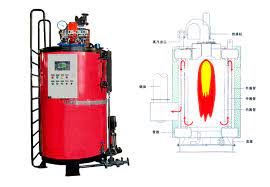
Sistem boiler terdiri dari: sistem umpan udara, sistem uap, dan sistem bahan bakar. Sistem umpan udara menyediakan udara ke boiler secara otomatis sesuai dengan kebutuhan uap. Berbagai keran disediakan untuk keperluan perawatan dan perbaikan. Sistem uap mengumpulkan dan mengontrol produksi uap di dalam boiler. Uap dialirkan melalui sistem perpipaan ke titik pengguna. Di seluruh sistem, tekanan uap diatur menggunakan keran dan pemantauan oleh monitor tekanan.
Sistem bahan bakar adalah semua peralatan yang digunakan untuk menyediakan bahan bakar guna menghasilkan panas yang dibutuhkan. Peralatan yang dibutuhkan untuk sistem bahan bakar bergantung pada jenis bahan bakar yang digunakan dalam sistem tersebut.
Udara yang disuplai ke boiler untuk diubah menjadi uap disebut umpan udara. Dua sumber umpan udara adalah: (1) Kondensat atau uap terkondensasi yang kembali dari proses dan (2) Pengisi udara (air baku yang telah diolah) yang harus disuplai dari luar ruang boiler dan proses pabrik. Untuk mendapatkan efisiensi boiler yang lebih tinggi, economizer digunakan untuk memanaskan umpan udara terlebih dahulu menggunakan limbah panas dalam buangan gas.
2. Pemanasan Minyak Termal

Pemanas Minyak Termal adalah pemanas yang menggunakan cairan Minyak Termal sebagai penghantar panas dan dapat bekerja hingga suhu 300 derajat Celcius atau lebih.
Berbeda dengan uap yang membutuhkan tekanan hingga 70 bar untuk mencapai suhu 285 derajat Celcius, Pemanas Minyak Termal hanya bekerja pada tekanan pompa sirkulasi, sehingga sangat aman dan peralatan yang membutuhkan pemanasan tidak perlu dirancang dengan konstruksi khusus.
Masa pakai cairan minyak termal yang digunakan umumnya lebih dari 10 tahun dan tidak perlu penambahan apa pun selama tidak ada kebocoran pada pipa atau peralatan pemanas, dan selama waktu tersebut tidak diperlukan pembersihan karena bagian dalam koil pemanas tidak berkerak seperti pada boiler uap. Beberapa unit pemanas minyak termal kami masih berfungsi dengan baik pada usia lebih dari 20 tahun.
Apa saja keunggulan Pemanas Minyak Termal dibandingkan dengan Boiler Uap?
• Beroperasi pada suhu tinggi dengan tekanan atmosfer
• Kontrol suhu yang presisi
• Tidak memerlukan pengolahan udara atau bahan kimia lain yang membutuhkan biaya tinggi
• Tidak ada kehilangan panas dari kondensat dan pembuangan seperti pada boiler uap
• Tidak ada korosi dan kerak di bagian dalam boiler
• Biaya perawatan sangat rendah
• Sepenuhnya otomatis dan mudah dioperasikan sehingga tidak memerlukan operator khusus.
Desain
Minyak Thermoblock umumnya dipasok dalam konstruksi vertikal yang menghemat ruang dan sangat efisien karena menggunakan burner terintegrasi yang memanfaatkan buangan gas untuk memanaskan udara pembakaran sehingga pembakaran oli menjadi sangat sempurna. Kumparan pemanas terbuat dari tabung boiler tanpa sambungan yang digulung secara kontinyu. Setiap sambungan diperiksa dengan cermat menggunakan uji radiografi dan uji tekanan akhir dengan tekanan hingga 30 bar. Oli termal mengalir di dalam kumparan dengan kecepatan yang dirancang dengan cermat untuk menghindari panas berlebih yang dapat menyebabkan kerusakan oli akibat pembentukan arang (pengendapan karbon).
Gas panas dari pemanasan aliran oli termal di ruang pembakaran sebagai radiasi panas dan kemudian pemanasan oli di koil konveksi melalui celah di antara koil dengan kecepatan tertentu dalam 3 lintasan berlawanan arah dengan arah aliran oli termal. Turbulensi yang dihasilkan oleh gas saat melewati koil menghasilkan peningkatan efisiensi pemanas dan efek pembersihan koil dari jelaga yang mungkin menempel di bagian luar koil. Cakupan Pengiriman: Setiap unit dilengkapi dengan aksesori, termasuk:
• Koil Pemanas lengkap dengan penutup
• Pompa Sirkulasi
• Tangki Ekspansi & Tangki Deaerasi
• Panel Kontrol
Desain Pemanas Minyak Termal BEJO – Studi Kasus
Desain Thermoblock Canggih untuk Pemanasan Industri Berefisiensi Tinggi
Pemanas Minyak Termal BEJO Thermoblock terutama diproduksi dalam konfigurasi vertikal , sehingga memberikan ukuran yang ringkas sekaligus memaksimalkan efisiensi termal. Desain vertikal ideal untuk fasilitas industri dengan ruang instalasi terbatas dan memungkinkan akses perawatan yang lebih mudah.
Sistem ini menggabungkan pembakar efisiensi tinggi terintegrasi yang memanfaatkan panas yang terkandung dalam pembuangan gas untuk memanaskan udara, pembakaran terlebih dahulu. Proses pemanasan awal pembakaran udara ini secara signifikan meningkatkan efisiensi pembakaran, menghasilkan konsumsi bahan bakar yang lebih rendah, emisi yang berkurang, dan keluaran panas yang lebih stabil.
Kumparan pemanasan dibuat dari tabung boiler tanpa sambungan berkualitas tinggi, yang dililit secara kontinyu untuk memastikan perpindahan panas yang seragam. Setiap sambungan las menjalani Pengujian Radiografi (RT) yang ketat dan seluruh bejana diuji secara hidrostatik pada tekanan hingga 30 bar untuk memastikan jaminan dan keamanan jangka panjang.
Minyak termal mengalir melalui koil dengan kecepatan yang dirancang secara cermat, mencegah panas berlebih lokal yang dapat menurunkan kualitas transfer cairan panas melalui retak termal atau pembentukan kokas .
Studi Kasus: Pabrik Pembuatan Resin
Latar belakang
Sebuah perusahaan manufaktur resin membutuhkan sistem pemanas yang mampu mempertahankan suhu proses yang stabil antara 260°C dan 280°C untuk bejana reaktornya. Sistem boiler uap sebelumnya kesulitan mempertahankan suhu yang konsisten, sehingga mengakibatkan kualitas produk yang bervariasi dan peningkatan biaya produksi.
Perusahaan tersebut memasang Pemanas Minyak Termal Thermoblock Vertikal BEJO yang dilengkapi dengan pembakar gas terintegrasi dan kontrol suhu otomatis.
Deskripsi proses
Gas hasil pembakaran kemudian melewati bagian konveksi dalam desain pertukaran panas tiga jalur , mengalir berlawanan arah dengan aliran oli termal. Konfigurasi aliran berlawanan ini memaksimalkan pemulihan panas sambil mempertahankan efisiensi termal yang sangat baik.
Saat pembakaran gas melewati saluran koil yang sempit, turbulensi terjaga terciptanya, meningkatkan koefisien pengerasan panas dan mengurangi pemadatan jelaga pada permukaan koil. Efek pembersihan mandiri ini membantu menjaga kinerja termal yang konsisten selama periode operasi yang panjang.
Keberhasilan sistem pemanas pada aplikasi resin tidak hanya ditentukan oleh kemampuan mencapai suhu tinggi, tetapi juga oleh kemampuan mempertahankan suhu tersebut secara stabil sepanjang proses. Pada produksi resin, perubahan suhu dapat mempengaruhi kecepatan dan karakteristik produk. Oleh karena itu, sistem pemanas harus mampu memberikan energi secara konsisten tanpa menghasilkan suhu yang berlebihan.
Dalam konfigurasi Thermoblock Vertikal BEJO
Dalam konfigurasi Thermoblock Vertikal BEJO, perpindahan panas berlangsung melalui beberapa mekanisme. Bagian radiasi menerima energi panas langsung dari proses pembakaran, sedangkan bagian konveksi memanfaatkan panas yang masih terdapat pada gas hasil pembakaran. Dengan memanfaatkan energi panas secara bertahap, energi dari bahan bakar dapat digunakan secara lebih optimal sebelum gas dibuang melalui sistem cerobong.
Desain tiga jalur juga memberikan kesempatan yang lebih besar bagi gas panas untuk melakukan perpindahan panas dengan permukaan koil. Aliran gas yang diatur melalui jalur yang sesuai dapat meningkatkan kontak antara gas panas dan permukaan pemanas. Pada saat yang sama, aliran minyak termal di dalam koil dirancang agar tetap berada pada kondisi yang sesuai untuk mencegah panas berlebih pada fluida.
Dalam penggunaan jangka panjang, kondisi minyak termal juga perlu dipantau. Suhu operasi yang terlalu tinggi secara lokal dapat mempercepat degradasi cairan. Oleh karena itu, desain koil dan kecepatan sirkulasi harus diperhitungkan sejak awal. Pengoperasian yang tepat dapat membantu mempertahankan karakteristik minyak termal dan mengurangi kebutuhan penggantian cairan secara tidak perlu.
Penggunaan sistem kontrol otomatis pada aplikasi ini juga membantu operator memperoleh kondisi proses yang lebih konsisten. Ketika suhu mendekati nilai yang telah ditentukan, sistem kontrol dapat menyesuaikan kebutuhan pembakaran sehingga pasokan panas mengikuti proses sebenarnya. Hal ini membantu mencegah pemanasan berlebihan sekaligus mengoptimalkan penggunaan bahan bakar.
Dari sisi produksi, kestabilan suhu dapat memberikan dampak positif terhadap konsistensi antar-batch. Produk yang diproses pada kondisi suhu yang lebih terkendali memiliki peluang lebih besar untuk menghasilkan karakteristik yang seragam. Bagi industri resin, konsistensi tersebut penting karena kualitas produk akhir harus memenuhi parameter yang telah ditentukan oleh pelanggan maupun standar produksi internal.
Hasil
Setelah pengoperasian Pemanas Minyak Termal BEJO, pabrik tersebut mencapai peningkatan operasional yang signifikan:
- Suhu reaktor stabil antara 260°C dan 280°C .
- Peningkatan kualitas resin dan konsistensi antar batch.
- Konsumsi bahan bakar berkurang karena efisiensi pembakaran yang lebih tinggi.
- Biaya perawatan lebih rendah karena berkurangnya kemacetan jelaga.
- Memperpanjang masa pakai oli termal dengan mencegah panas berlebih dan pembentukan kerak.
- Peningkatan gangguan produksi dengan pengoperasian yang terus menerus selama 24 jam.
- Efisiensi energi secara keseluruhan lebih baik dibandingkan dengan sistem pemanas uap sebelumnya.
Lingkup Kota
Setiap Pemanas Minyak Termal BEJO dipasok sebagai paket lengkap yang meliputi:
- Kumparan Pemanas Minyak Termal dengan Casing Berinsulasi
- Pembakar Industri Berkinerja Tinggi
- Pompa Sirkulasi Minyak Panas
- Tangki Ekspansi
- Tangki Deaerasi
- Panel Kontrol Digital dengan kontrol suhu otomatis
- Instrumen Keselamatan
- Pengukur Tekanan dan Suhu
- Sistem Cerobong Asap
- Katup Utama dan Sambungan Pipa
- Manual Pengoperasian & Pemeliharaan
- Diagram Pengkabelan Listrik
- Dokumentasi Pengujian Pabrik
Kesimpulan
Pemanas Minyak Termal Thermoblock Vertikal BEJO adalahsolusi pemanasan industri berkinerja tinggi yang dirancang untuk memberikan proses pemanasan yang aman, efisien, dan andal pada suhu hingga 350°C . Desain vertikalnya yang ringkas meminimalkan ruang instalasi sekaligus memaksimalkan efisiensi perpindahan panas melalui pertukaran panas aliran berlawanan tiga jalur yang canggih, koil tabung boiler tanpa sambungan, dan sistem pembakar efisiensi tinggi.
Dirancang untuk pengoperasian industri berkelanjutan, sistem ini menyediakan kontrol suhu yang presisi , pengoperasian tekanan rendah , dan penghematan bahan bakar yang sangat baik , membantu produsen mengurangi biaya operasional sekaligus meningkatkan stabilitas proses dan kualitas produk. Desain koil yang dioptimalkan juga meminimalkan risiko degradasi dan pembentukan kerak pada oli termal, memperpanjang masa pakai fluida dan masa pakai peralatan.
Dengan konstruksi yang kokoh, fitur keselamatan canggih, dan persyaratan perawatan yang rendah, Pemanas Minyak Termal BEJO adalah pilihan ideal untuk industri yang membutuhkan pemanasan suhu tinggi yang andal, termasuk pengolahan kimia, makanan dan minuman, farmasi, plastik, tekstil, kayu lapis, pengolahan minyak sawit, pabrik pencampuran aspal (AMP), pembuatan cat dan resin, pabrik kertas, pemanasan laut, dan banyak aplikasi proses industri lainnya .
Baik dipasang di fasilitas produksi baru atau diintegrasikan ke dalam jalur proses yang sudah ada, Pemanas Minyak Termal Thermoblock Vertikal BEJO menyediakan solusi pemanasan hemat energi jangka panjang yang meningkatkan produktivitas, mengurangi waktu henti, dan mendukung operasi industri yang berkelanjutan.
Kantor Spesialis Sistem Pemanas Industri Boiler PT Indira Mitra
:Emerald Residence Sepatan Ruko 8i, Kosambi Tangerang
Telepon: (021) 352 95874
WhatsApp : +62 813-8866-6204 (Ratman Bejo)
Bengkel : Tangerang – Indonesia
Website : www.indiramitraboiler.co.id
Website : www.burner.co.id
Email : info@indira.co.id | idmratman@gmail.com
YouTube : https://www.youtube.com/@Bejoburnerindonesia